
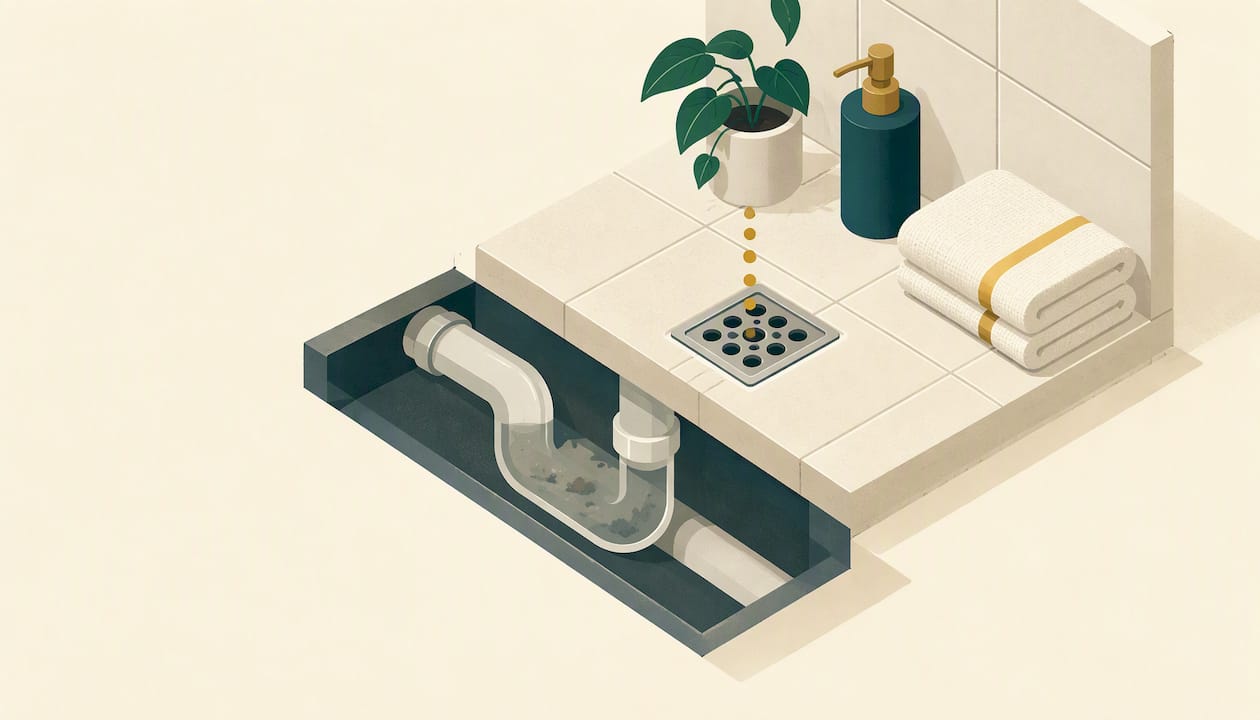
Drain flies in a bathroom come from the slimy film that builds up inside a drain, trap or overflow, and swatting the adults never fixes that. Find the drain they are breeding in, scrub the film out with a stiff brush, and keep every drain wet and clean. Most households can do all of this in an afternoon with tools they already own.
TL;DR
- Drain flies breed in the gunk lining drains and traps, so the fix is to remove that film, not to kill the flies you see.
- Find the source with a simple overnight test: tape over a drain, or set a jar upside down over it, and see where flies show up.
- Scrub with a stiff brush, then use an enzymatic or foaming drain product. Bleach and vinegar poured down the drain are not effective.
- Run water in rarely used drains about once a week and fix leaks so the flies cannot restart.
- If flies return after every drain is clean, a hidden leak may be the cause. Call a plumber.
Table of Contents
- What drain flies are and why they show up in the bathroom
- Are drain flies harmful?
- Step 1: Find the drain they are breeding in
- Step 2: Clean the drain properly
- Step 3: Deal with the adult flies while you clean
- Step 4: Keep them from coming back
- When the flies keep coming back
- Silverfish in the bathroom: a different pest, a similar cause
- Mold mites: what to do if you suspect them
- Which pest is it? A quick comparison
- Get more fixes like this
- FAQ
- Sources
What drain flies are and why they show up in the bathroom
Drain flies are small, fuzzy, moth-like insects, about 1/16 to 1/4 inch long and pale brownish-gray to black, according to University of Maryland Extension. They turn up wherever there are drains, and bathrooms have plenty: the sink, the tub or shower, the floor drain and the overflow openings.
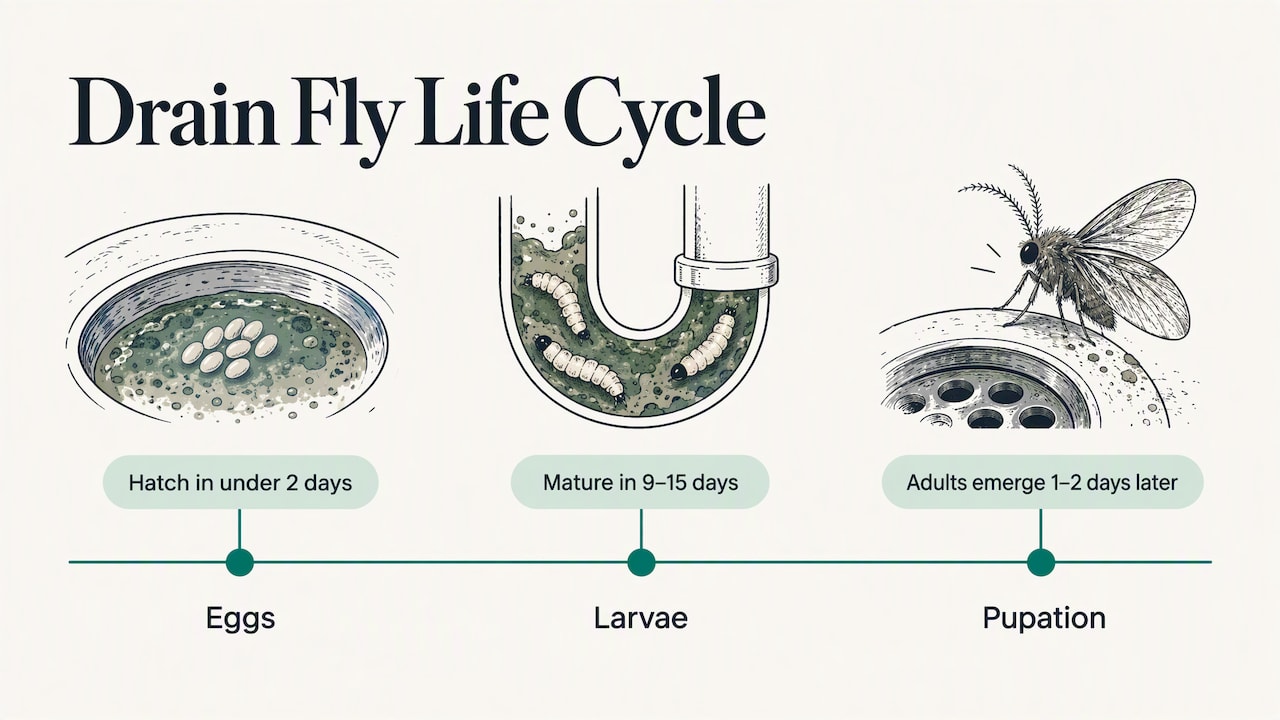
The flies you see are only the adults. The larvae live in the gelatinous film or slime inside drains and traps, where they feed on bacteria, algae and fungi (University of Maryland Extension). That film is the real problem. As long as it is there, new flies keep emerging.
The cycle is fast. Eggs hatch in under two days, larvae mature in 9 to 15 days, and adults emerge one to two days after pupating (NC State Extension). So a few flies this week can mean a crowd in a few weeks.
Why a guest bathroom is the usual suspect
Drains that sit unused are the worst offenders. Water in the trap goes stale and the film grows undisturbed. Mississippi State University Extension notes that flies appearing suddenly in rarely used rooms can mean the P-traps have dried out, which lets adult flies come up from the sewer side (Mississippi State University Extension). If you have a guest shower nobody has touched since summer, start there.
Outdoors can matter too. In summer, flies can come in from outside if they find moisture in clogged gutters or near air conditioning units (University of Kentucky Entomology).
Are drain flies harmful?
Mostly they are a nuisance. Alabama Extension describes them as more of an annoyance than a health threat, though they can potentially carry microbes from filthy breeding sites to surfaces where they land (Alabama Cooperative Extension System). That is a good reason to deal with them promptly and wipe down counters near the sink, but it is not a reason to panic.
The same source says drain flies usually point to a slow or clogged drain that needs cleaning. If your bathroom sink also gurgles or drains sluggishly, our guide on why a sink drains slowly covers the clog side of the problem.
Step 1: Find the drain they are breeding in
Killing flies without finding the source is the most common reason they come back. Spend ten minutes on detective work first.
Check the usual spots
Look at every place where moisture and organic gunk can collect:
- Sink drains and the overflow hole near the top of the basin
- Tub and shower drains, plus the tub overflow
- The base of the toilet, where the seal meets the floor
- Floor drains in a basement bathroom or laundry area
- Cracked floor or shower tiles that may hide wet organic matter underneath
Overflow holes, tub and shower drains, toilet bases and leaky pipes behind walls are common sites people overlook (Alabama Cooperative Extension System).
Run the overnight test
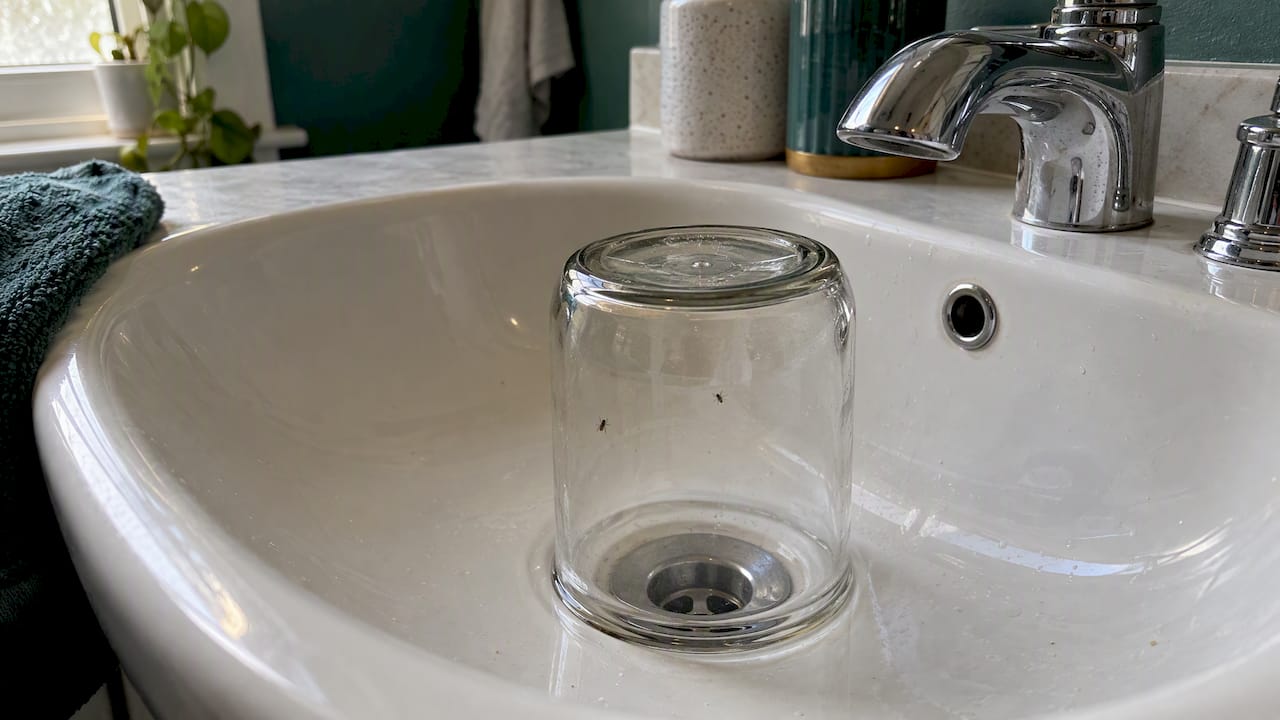
To confirm which drain is the source, put a strip of duct tape over the opening overnight, sticky side down, or invert a jar over it. In the morning, look for flies stuck to the tape or trapped in the jar (Mississippi State University Extension). Test one drain per night or use several strips at once, one per drain, and label them.
Step 2: Clean the drain properly
The most effective control is thorough mechanical cleaning with a stiff brush and a drain cleaner, according to Alabama Extension. Enzymatic or foaming products can then reach deeper into the pipe, where a brush cannot.
Here is the routine we recommend:
- Remove the stopper or strainer. Pull out the hair and sludge by hand with gloves on. Bag it and put it in the trash.
- Scrub the visible walls. Use a stiff bottle brush or drain brush and work as far down as it reaches. Scrub the underside of the stopper too.
- Clean the overflow hole. Push the brush through it, since the slime in there is just as good a nursery.
- Apply an enzymatic or foaming drain treatment. Follow the label. Many are designed to be left in the drain overnight when the bathroom is not in use.
- Flush with water. Run water for a minute or so afterward.
- Repeat for several days. Eggs and larvae you missed will keep emerging, so a second and third round is normal.
What not to pour down the drain
It is tempting to reach for bleach or boiling water. Alabama Extension says pouring bleach or vinegar down the drain is ineffective and may damage the drainpipe (Alabama Cooperative Extension System). The liquid runs past the film instead of removing it, which is why the flies tend to return within days.
One safety rule matters more than the rest: never mix ammonia and bleach. The reaction releases hazardous gas (Alabama Cooperative Extension System). If you have already used one product in the drain, rinse thoroughly and ventilate before using anything else.
If your home has a septic system, read the product label first. NC State Extension advises checking that cleaners will not disrupt the microbial activity the tank needs (NC State Extension).
If the drain smells as well as attracting flies, our guide on getting rid of drain smell walks through the odor side.
Step 3: Deal with the adult flies while you clean
Adults live only a short time, so they are not the target, but removing them reduces the annoyance while you work on the drain. Keep a few simple habits:
- Use the tape or jar from the overnight test as a trap in the room.
- Keep the bathroom door closed when you can, so flies do not drift to the kitchen.
- Wipe up standing water on counters and around the tub.
Drain flies are sometimes mistaken for fruit flies. If the flies hover around a fruit bowl or trash can in the kitchen rather than the bathroom drain, see how to get rid of fruit flies.
Step 4: Keep them from coming back
Once the drains are clean, prevention is cheap:
- Run water weekly in drains you rarely use, so the trap stays full and the film cannot settle. This is part of Alabama Extension’s advice, along with keeping drains clean and fixing leaks (Alabama Cooperative Extension System).
- Fix drips. A constantly damp area under a sink feeds the film. Our guide to fixing a leaky faucet helps with the most common source.
- Clean gutters and keep the area around air conditioning units from staying soggy, since the flies can arrive from outside.
- Brush the drain monthly with the same stiff brush, even when everything looks fine.
When the flies keep coming back
If you have cleaned every drain carefully and flies still appear, the cause may not be in a drain at all. Alabama Extension says persistent infestations despite careful sanitation may point to a broken pipe or a leak under a slab or in a crawlspace (Alabama Cooperative Extension System). Signs include a musty smell, damp spots on walls or floors, or a water bill that rises for no reason.
This is the point to stop and call a licensed plumber. A hidden leak is not a DIY job, and you can describe what you have already tried, which saves them time.
Our take on drain flies
Almost everyone’s first move is to kill what they can see: a spray, a swat, a pot of boiling water. It feels productive and it is the reason drain flies seem to come back “out of nowhere”.
At Fix It Daily we think the better habit is to find the root cause first, try the safe fix, and only then decide whether you need help. With drain flies that means locating the one drain with film in it, scrubbing it, and keeping it wet. We write our guides in plain English, with the safety warnings where you need them, and we say clearly when a problem is past the point where you should keep trying and call a qualified pro.
A leak behind a wall or under a slab is exactly that kind of problem.
Nikki
Silverfish in the bathroom: a different pest, a similar cause
If what you are seeing is a wingless, silvery, carrot-shaped bug that moves fast, that is a silverfish, not a drain fly. The two share a root cause: dampness. UC IPM says silverfish live and develop in damp, warm places and are nocturnal, which is why you usually spot them at night or when you switch on the light. They can also fall into a tub or sink and be unable to climb out (UC IPM).
Why they are in your bathroom
Bathrooms give silverfish moisture and warmth. UC IPM adds that they can travel along pipelines and through openings in walls or floors. Health Canada notes they also hitchhike into homes on food, furniture, old books, papers and old starched clothing, and live in wall voids, subfloor areas and cracks (Health Canada). A box of old papers stored near the bathroom can be as much of a draw as the shower.
How to get rid of them
The UC IPM approach is to make the room less hospitable:
- Keep the bathroom clean and dry, and use a fan or a dehumidifier.
- Repair plumbing leaks.
- Patch holes around pipes.
- Use traps, and reserve insecticides for large infestations, following the label (UC IPM).
A simple trap is a glass jar with tape wrapped around the outside. Set it where you see silverfish. They climb the tape and fall in, but cannot climb back up the smooth glass (Health Canada). Check it each morning and empty it.
If you find silverfish throughout the house, in closets, books and the attic as well as the bathroom, the infestation is beyond a bathroom fix. A licensed pest professional can help identify where they are living.
Mold mites: what to do if you suspect them
Mold mites are tiny, usually too small to see individually, and they feed on mold. In a bathroom, the mites are a sign that mold is growing somewhere, often on grout, caulk, a damp wall, or behind a leaky fixture. So the reliable answer is to treat the moisture and the mold, not the mites.
Run the exhaust fan during and after showers, wipe wet surfaces, fix leaks, and clean visible mold from hard surfaces with a household cleaner made for that purpose, following its label. Never mix cleaning products. If the mold covers a large area, keeps coming back, or sits on drywall or under flooring, get a qualified mold or building professional to look at it. Dampness behind a wall may also be what is attracting drain flies and silverfish.
Which pest is it? A quick comparison
| Pest | What it looks like | Where it hangs out | Main fix |
|---|---|---|---|
| Drain fly | Small, fuzzy, moth-like, flies or rests on walls | Near sinks, tubs, showers, floor drains | Scrub the drain film, use an enzymatic or foaming product, run water weekly |
| Silverfish | Wingless, silvery, fast-moving, active at night | Tubs, sinks, cracks, behind baseboards | Dry the room, seal gaps, set jar traps |
| Mold mites | Too tiny to see individually, show up as dust-like movement near mold | Moldy grout, walls, damp materials | Remove mold, cut humidity, fix leaks |
Get more fixes like this
Drain flies are one of those problems that look like a pest issue but turn out to be a plumbing and cleaning issue. That is the kind of thing we cover at Fix It Daily: practical first steps, clear safety warnings, and a straight answer on when to call a pro.

If your bathroom flies came with a slow drain or low flow, start with our guide to fixing low water pressure in a shower, or browse everything else on the Fix It Daily home page.
FAQ
Will pouring bleach down the drain kill drain flies?
Not reliably. Alabama Extension says pouring bleach or vinegar down a drain is ineffective and may damage the pipe, because it does not remove the slime where the larvae live. Scrub the drain with a stiff brush and follow with an enzymatic or foaming product instead. Never combine bleach with ammonia.
Do drain flies mean I have a plumbing problem?
Usually it means a drain is slow, dirty or clogged and needs cleaning, not that a pipe has failed. If the flies persist after you have cleaned every drain, a broken pipe or leak under a slab or in a crawlspace is possible. At that point, a licensed plumber should check.
How long does it take to get rid of drain flies?
Because eggs hatch in under two days and larvae mature in 9 to 15 days, expect to repeat the cleaning for a couple of weeks to catch every stage. If you clean thoroughly and keep drains wet, you should see far fewer flies within days, but keep the routine going until none appear.
Why do I only see drain flies in the guest bathroom?
Drains that are rarely used let the film build and the trap water evaporate. Mississippi State Extension notes that dried-out P-traps can let flies come in from the sewer side. Run water in the guest sink and shower about once a week, and clean the drain before guests arrive.
Sources
- Drain Flies, University of Maryland Extension
- Drain Flies, NC State Extension Publications
- Drain Flies or Moth Flies, University of Kentucky Entomology
- Drain Flies in the Home, Alabama Cooperative Extension System
- Sewage Gnat, Mississippi State University Extension
- Silverfish and Firebrats, UC IPM
- Silverfish and Firebrats, Health Canada